Step-by-Step Guide to Artificial Flower Arranging for Beginners | Easy DIY Home Decor
Introduction
First, start with greenery to create structure. Then, add focal flowers to build balance. Artificial flower arranging is no longer just a craft hobby — it has become a stylish and budget-friendly way to elevate home décor. Whether you want to decorate your living room, office desk, dining table, or even create handmade gifts, artificial flowers offer beauty without maintenance.
Unlike fresh flowers, faux flowers do not wilt, require water, or lose petals. With modern manufacturing techniques, high-quality artificial flowers look surprisingly realistic.
If you are new to floral design, don’t worry. This complete step-by-step guide to artificial flower arranging for beginners will walk you through everything — from choosing flowers to styling them professionally.
By the end of this guide, you will be able to create arrangements that look elegant, balanced, and natural.
🌿 Why Choose Artificial Flowers?
Before diving into the steps, let’s understand why artificial flowers are a smart choice:
1️⃣ Long-Lasting Beauty
Artificial flowers maintain their appearance for years.
2️⃣ Cost-Effective
You invest once and reuse them season after season.
3️⃣ Low Maintenance
No watering, no sunlight, no mess.
4️⃣ Allergy-Friendly
Perfect for homes where fresh pollen may cause allergies.
5️⃣ Seasonal Flexibility
You can mix spring tulips with autumn leaves — without limitations.
Materials You Will Need
To begin your DIY artificial flower arrangement, gather these materials:
- Artificial flowers (main blooms + filler flowers)
- Greenery stems (eucalyptus, fern, ivy, etc.)
- Vase, basket, or decorative container
- Floral foam (if needed)
- Wire cutters or strong scissors
- Floral tape (optional)
- Decorative stones, moss, or ribbons (optional)
💡 Beginner Tip: Choose 3–4 types of flowers in complementary colors instead of too many varieties. Simplicity creates elegance.
🎨 Step 1: Choose a Color Theme
One of the biggest beginner mistakes is mixing random colors.
Instead, pick a color palette:
- 🌸 Soft & Romantic: Pink + White + Green
- 🌻 Bright & Cheerful: Yellow + Orange
- 🌿 Modern Minimal: White + Green
- 🌺 Bold Statement: Red + Deep Purple
A defined theme makes your arrangement look professionally designed.
✂️ Step 2: Prepare and Trim the Stems
Artificial flowers often come with long stems. You need to trim them based on your container size.
How to Cut Properly:
- Use wire cutters for thick stems.
- Keep taller stems for the back or center.
- Shorter stems go in front.
- Always cut at slightly different lengths for depth.
Natural flower arrangements are never perfectly even — variation adds realism.
🌱 Step 3: Start with Greenery First
Professional florists always begin with greenery.
Why?
Because greenery:
- Creates structure
- Adds fullness
- Frames the flowers
- Makes arrangements look natural
Insert greenery around the edges and slightly in the center. This builds the foundation.
🌼 Step 4: Add the Main (Focal) Flowers
Now add your largest or most eye-catching blooms.
These are called focal flowers.
Place:
- One in the center
- Two slightly to the sides
- Keep spacing balanced
Use the “triangle method” — imagine an invisible triangle between the main flowers. This creates visual harmony.
🌷 Step 5: Fill Gaps with Smaller Flowers
After placing main flowers, you may notice empty spaces.
Fill these gaps with:
- Smaller flowers
- Buds
- Accent stems
Do not overcrowd. Allow breathing space between blooms.
Remember: Balanced, not stuffed.
Step 6: Rotate and Adjust
This is where beginners improve instantly.
Rotate your arrangement slowly and check:
- Is one side heavier?
- Are flowers facing outward?
- Does it look balanced from all angles?
Bend stems slightly for natural curves.
Step 7: Add Final Decorative Touches
Enhance the design by adding:
- Decorative stones at the base
- Artificial moss
- A tied ribbon
- LED fairy lights
- Decorative branches
Small finishing details elevate simple arrangements into elegant décor pieces.
🏡 Styling Ideas for Different Spaces
Living Room Centerpiece
Use larger vases with bold flowers.
Bedroom Nightstand
Soft pastel tones in small containers.
Dining Table
Low-height arrangements so they don’t block view.
Office Desk
Minimal white flowers with greenery for calm vibes.
❌ Common Mistakes Beginners Should Avoid
1. Using Too Many Flower Types
Keep it simple.
2. Ignoring Proportion
Tall flowers in small vases look awkward.
3. No Height Variation
Everything at same level looks artificial.
4. Skipping Greenery
Greenery is essential for realism.
5. Overcrowding
Less is often more.
🌸 Advanced Tips to Make Artificial Flowers Look Real
If you want your arrangement to look premium:
✔ Slightly bend stems
✔ Mix textures (silk + plastic + fabric leaves)
✔ Dust regularly
✔ Choose matte-finish flowers instead of shiny plastic
✔ Layer flowers at different depths
Natural imperfections create authenticity.
🎁 Creative DIY Ideas Using Artificial Flowers
- Handmade gift bouquets
- Festival decorations
- Wedding backdrop designs
- Wall-mounted floral frames
- Decorative wreaths
- Balcony décor pieces
You can even create seasonal arrangements and rotate them throughout the year.
💰 Budget Tips for Beginners
If you are just starting:
- Buy flowers during sale seasons
- Reuse greenery
- Change only focal flowers seasonally
- Thrift stores sometimes have hidden gems
You don’t need expensive materials to create beautiful décor.
Maintenance & Cleaning Guide
Artificial flowers collect dust over time.
Here’s how to clean them:
- Use a soft brush weekly
- Blow air with a hair dryer on cool mode
- Wipe gently with a damp cloth
- Avoid harsh chemicals
Regular cleaning keeps them fresh-looking.
Frequently Asked Questions (FAQ)
Indoors and with proper care, high-quality artificial (silk/fabric) flowers typically last 5–10 years — sometimes longer. Outdoor or low-quality pieces will fade and degrade faster.
Why that range?
Material quality: Silk and premium fabric petals keep color and shape far longer than cheap plastic alternatives.
Light exposure / UV: Sunlight causes fading and brittle stems — indoor placement away from direct sun extends life dramatically.
Dust and dirt: Accumulated dust makes faux blooms look old. Regular cleaning (soft brush, compressed air, gentle wipe) preserves look and can add years.
Environment: Humidity, smoke, and pollutants speed deterioration; outdoor installations need UV-resistant materials and expect shorter lifespans (often 2–5 years depending on exposure).
Care tips that extend lifespan:
Keep out of direct sun and heavy humidity.
Dust weekly; deep-clean seasonally (hair dryer on cool, soft brush, gentle wipe).
Store unused pieces in boxes away from light to avoid fading.
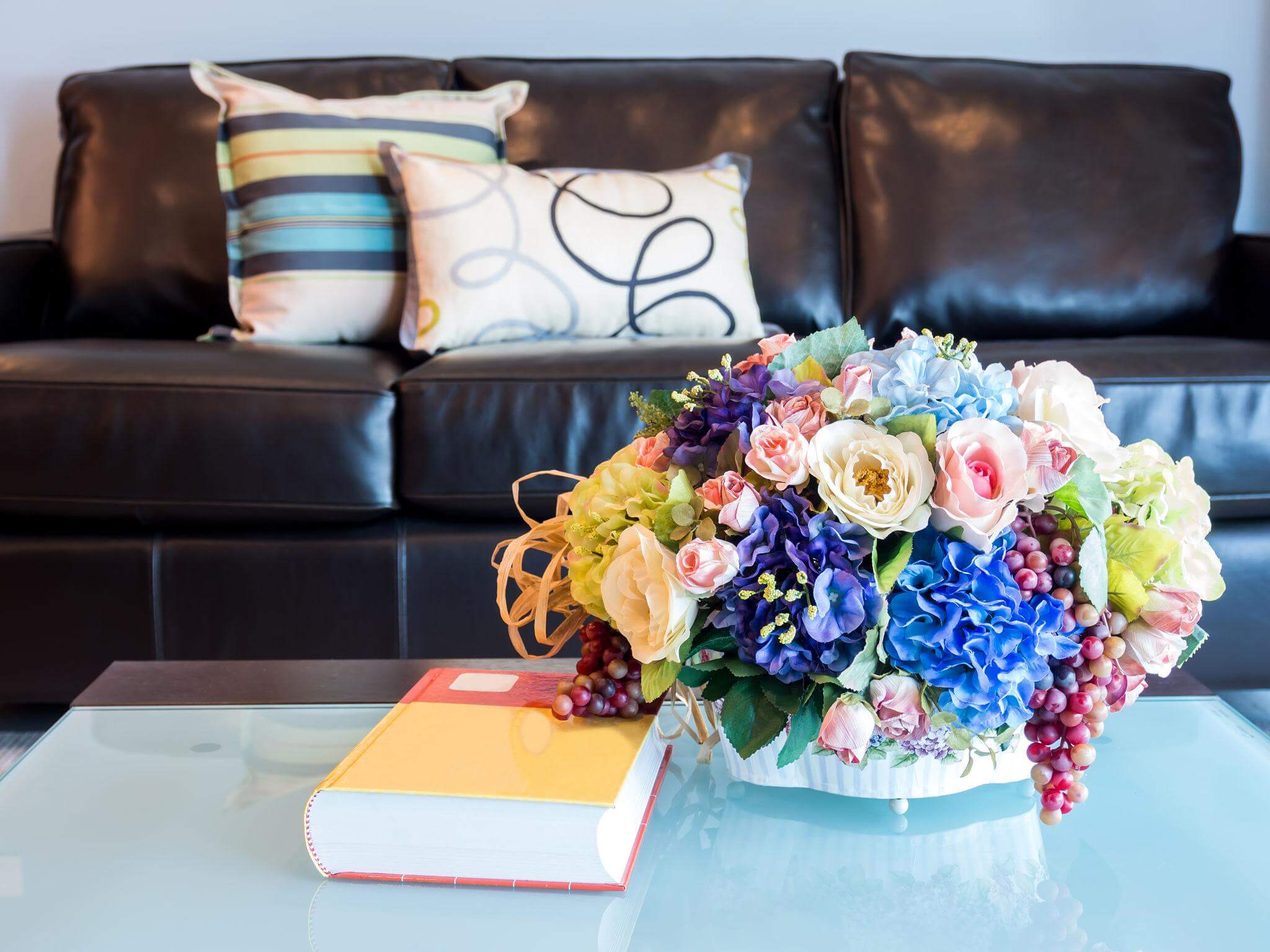
Yes — with the right materials and styling techniques faux flowers can look convincingly real.
Practical tips to increase realism (actionable):
Mix textures and finishes. Combine silk blooms with matte-finish leaves; avoid shiny plastic petals that immediately read fake.
Vary stem lengths and groupings. Natural arrangements use uneven heights and small clusters of the same flower type rather than one flower per location. Use odd numbers (3, 5, 7).
Add real or realistic greenery. Mixing a few real greens or high-quality faux greens like eucalyptus helps disguise artificial blooms.
Hide mechanics. Conceal glue lines, wire ends, and plastic stem bases inside opaque containers or with moss/stones.
Position naturally. Place arrangements where a living plant would grow (near a window ledge, on a shelf) to avoid the “placed here for show” look.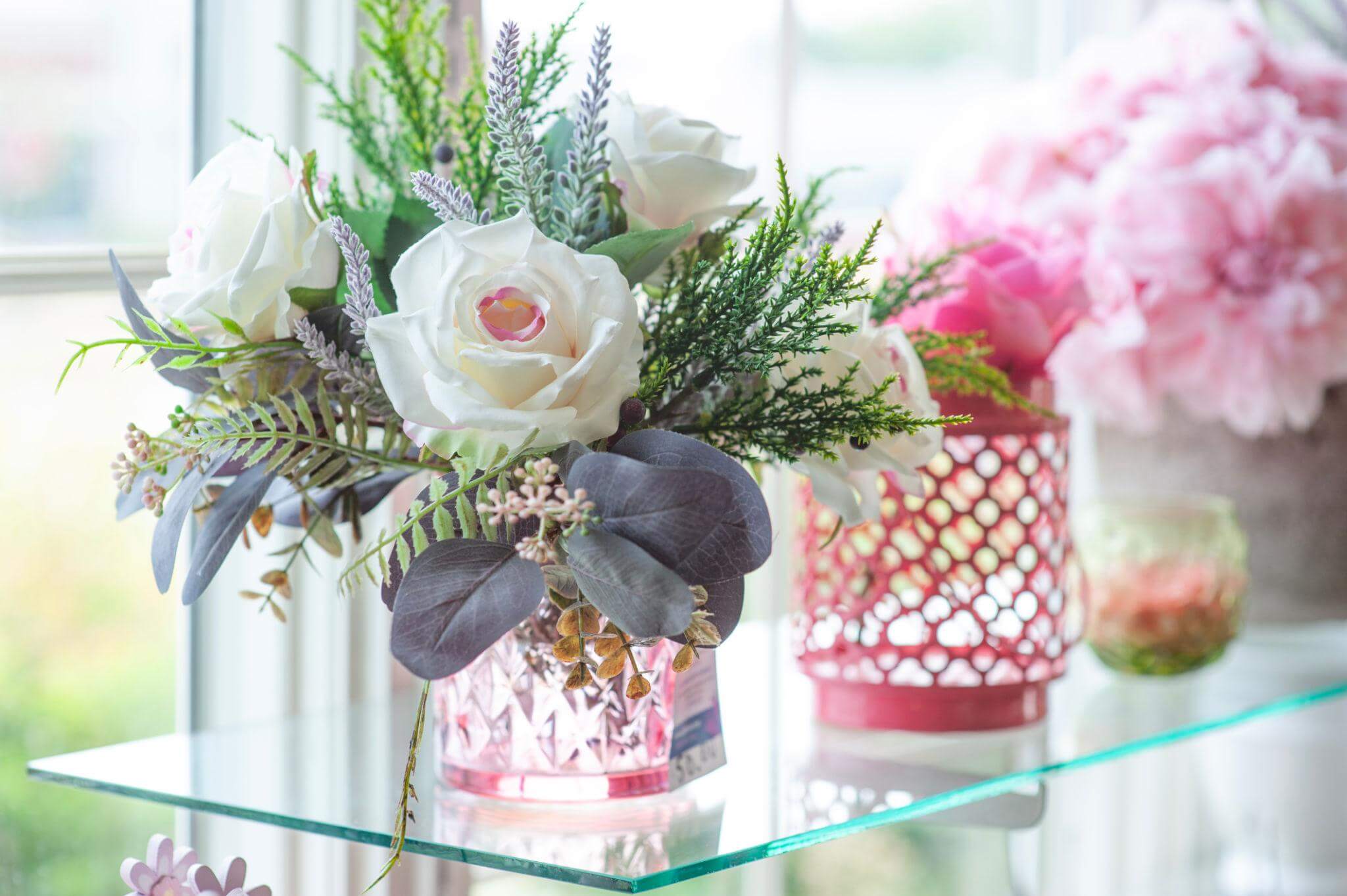
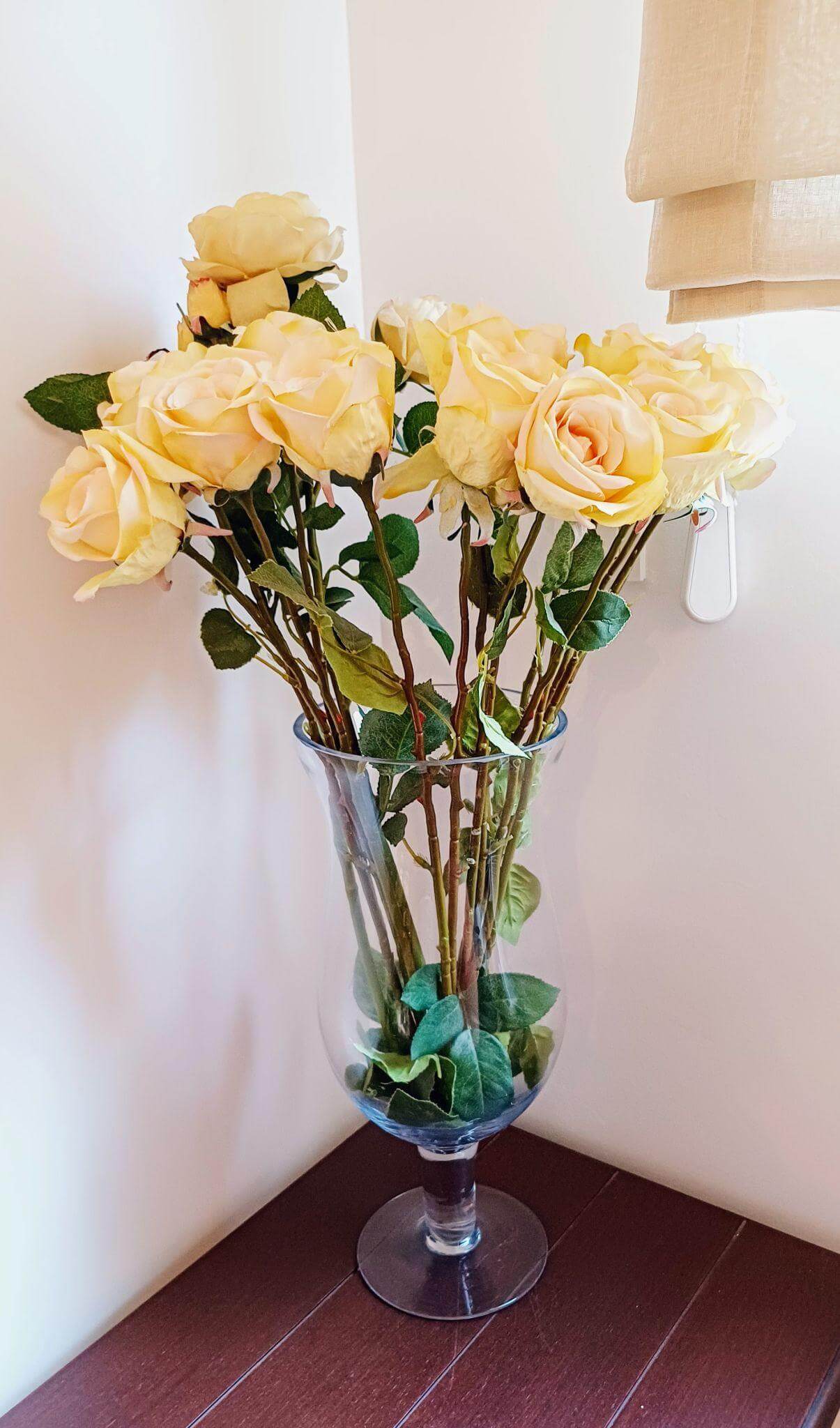
Not always — but dry floral foam (or alternatives) is very helpful for stability and precise placement. Use dry foam (not wet floral oasis) for faux stems; consider eco-friendly alternatives when possible.
When to use floral foam:
For heavy or tall arrangements that must stay rigid (table centerpieces, tall vases). Dry foam lets you anchor stems firmly.
When to skip it:
For simple bud vases or arrangements where stems can be wired/tucked into a filler (pebbles, marbles) — foam is unnecessary and single-use foam has environmental downsides.
Good alternatives to traditional wet floral foam:
Dry floral foam (styro-type) for faux — stable and easy to use.
Chicken wire or floral mesh inside the vase to hold stems in place.
Floral frogs/pin holders (ceramic/metal) for heavier stems.
Reusable mechanics: oasis alternatives like reusable grid inserts, adhesive clay, or wrapped tape cross over the vase opening.
Environmental note: traditional wet floral foam is problematic (single-use plastic). If sustainability matters for your brand, use reusable mechanics or plant-fiber solutions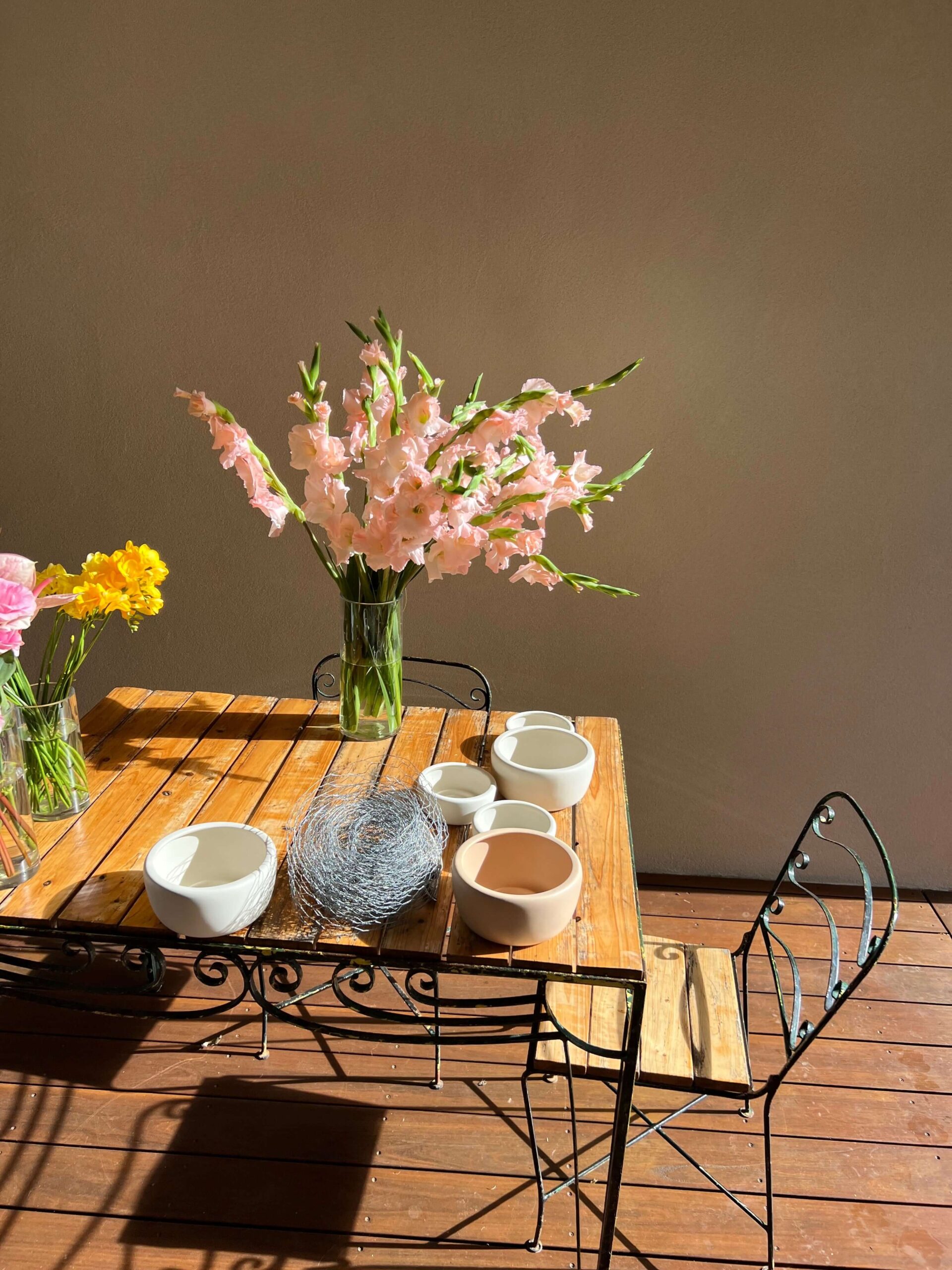
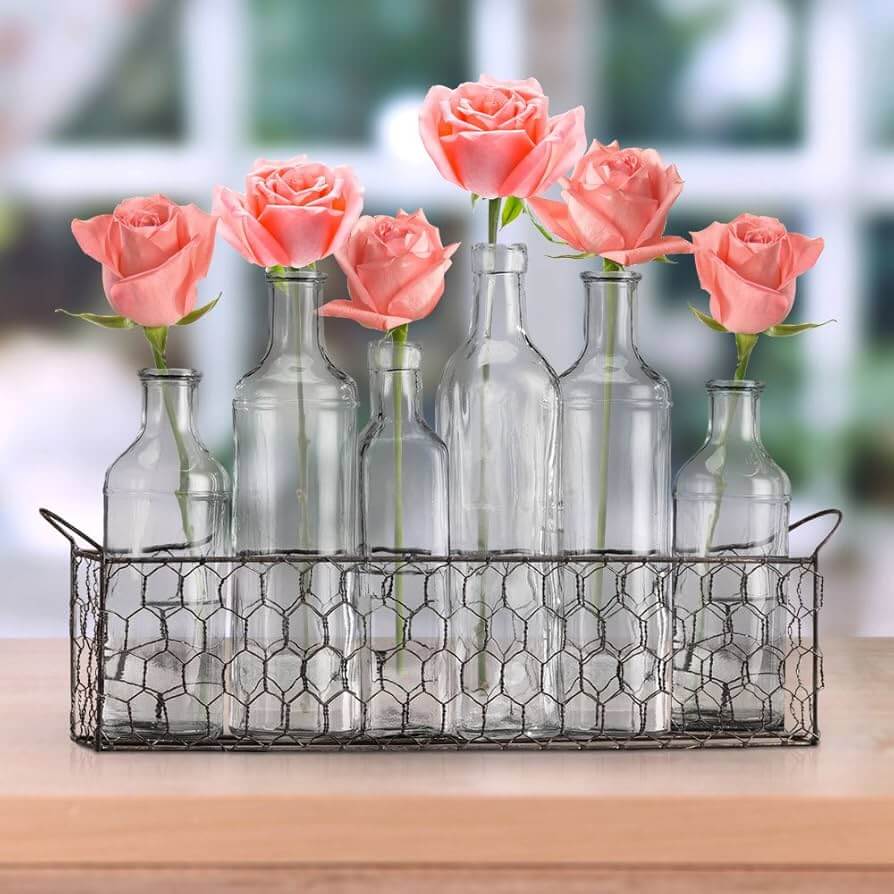
Choose the container to match scale, conceal mechanics, and complement your style — glass vases, ceramic pots, and woven baskets are top picks depending on the look. Container guidance (practical):
Glass vases: Great for modern and minimal looks; use pebble/marble fillers to hide stems and stabilize. For tall arrangements, make sure the base is heavy enough to prevent tipping.
Ceramic pots or urns: Offer weight and hide foam or wiring; perfect for classic or formal arrangements.
Wicker/wood baskets: Give a rustic, cozy vibe — line them with a liner or moss to hide mechanics.
Low bowls or compotes: Best for dining tables (low profile so guests can see over them).
Practical checklist when choosing a container:
Match container height to stem length (proportion matters).
Ensure container weight/width prevents tipping.
Use opaque containers when you can’t neatly conceal stems.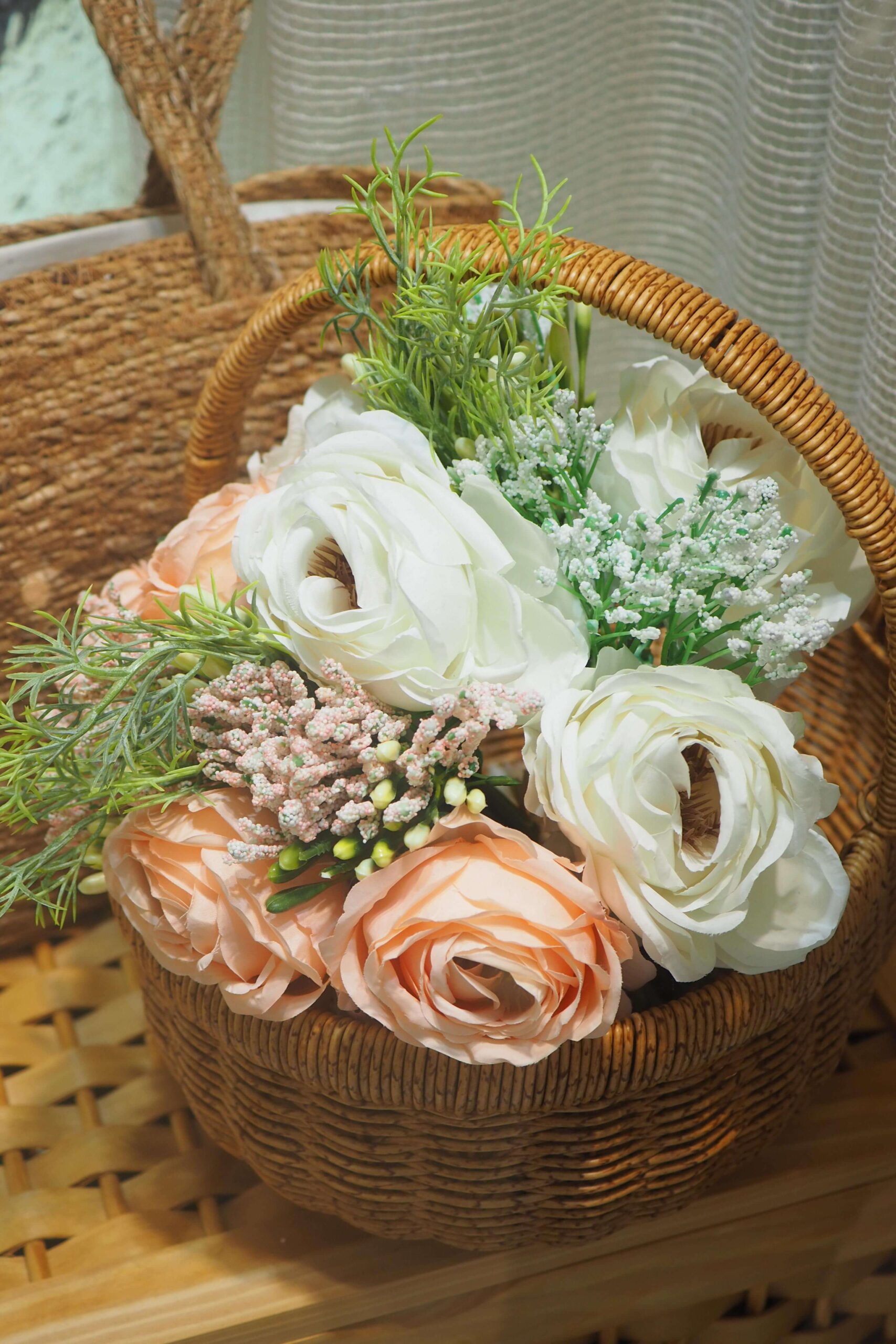
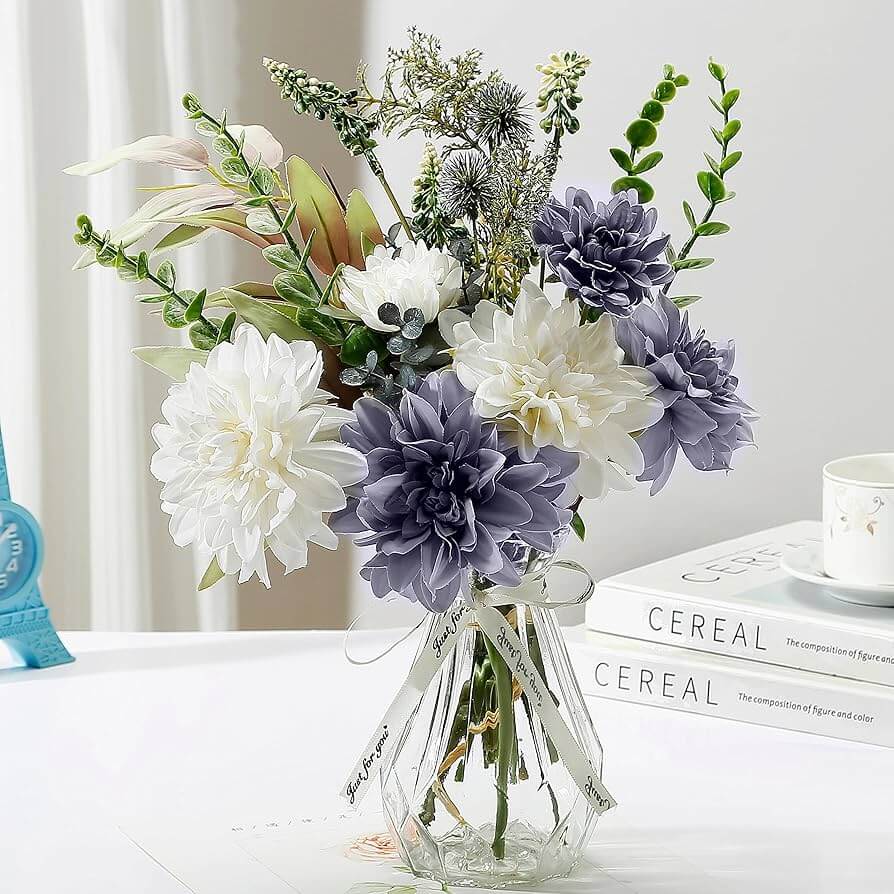
Start small and use odd numbers — 3 for tiny bud vases, 5–7 for small to medium arrangements; scale up (10–20+) for centerpieces depending on size. Practical rules of thumb:
Small bud vase: 1–3 stems.
Small table arrangement: 5–7 stems (mix focal + fillers + greenery).
Medium centerpiece: ~15–20 stems total (includes focal, fillers, and greens).
Design tips:
Use the rule of odd numbers (3, 5, 7) for a more organic look.
Think in groups/clusters rather than evenly spaced single stems — cluster 3 of the same bloom for realism.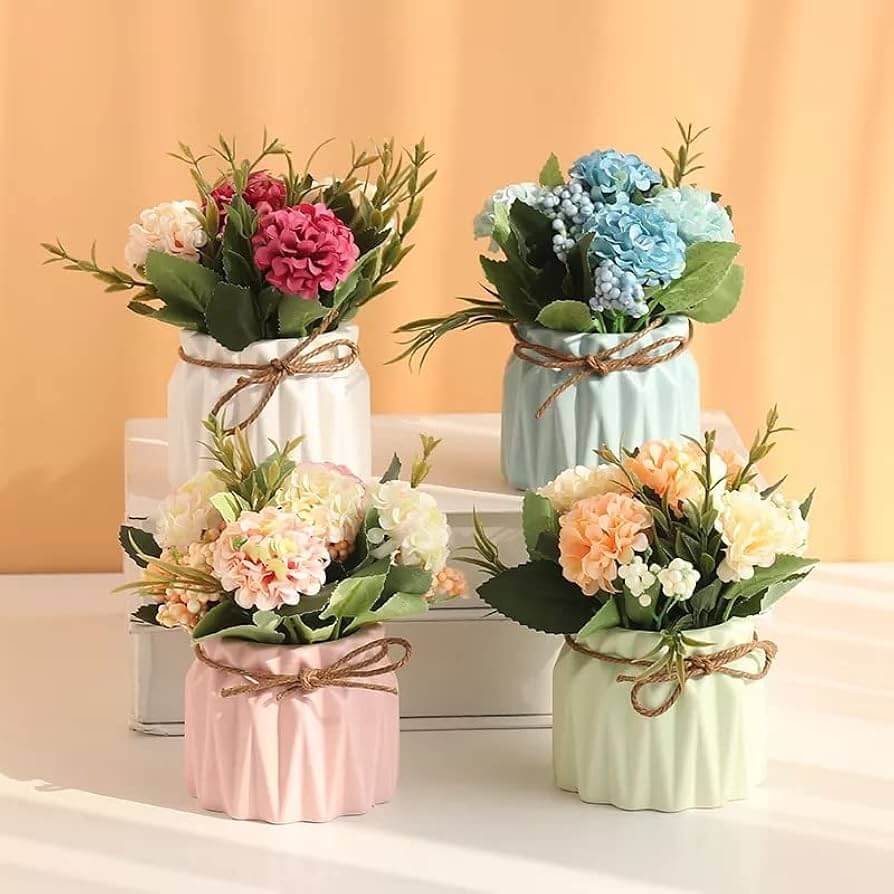
🎯 Conclusion
Artificial flower arranging is a beautiful and affordable way to decorate your home.
Unlike fresh flowers, artificial blooms do not wilt. In fact, they can last for years with proper care.
Because of this, many homeowners now prefer faux arrangements for long-term decoration.